Things I've built.
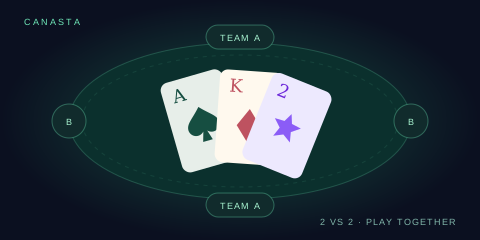
Canasta
A 2-vs-2 Rajasthani Canasta game with online rooms, solo play against bots, and a dedicated rules engine for melds, wild cards, team reserves, and round scoring.
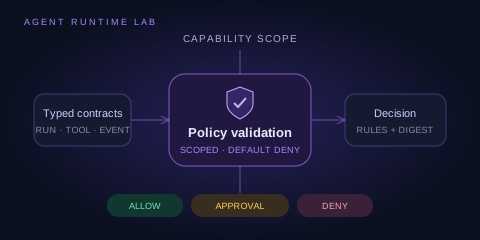
Agent Runtime Lab
Provider-neutral runtime foundations: typed contracts, validated run-state transitions, scoped default-deny policies, and a local policy-validation API, backed by property and adversarial tests.
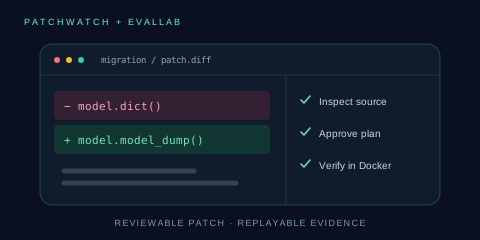
PatchWatch + EvalLab
An evidence-first dependency upgrade workflow: inspect a Python repo, approve a migration plan, verify repairs in Docker, and review the patch with check logs and independent evaluation.
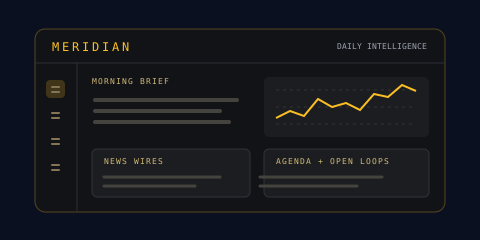
MERIDIAN
A daily dashboard combining live markets, curated news, weather, job listings, and personal planning. Optional Gemini briefings synthesize the day's signals, with a rule-based fallback.
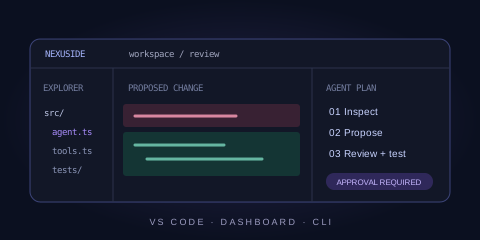
NexusIDE
A shared coding-agent engine across a VS Code extension, browser dashboard, and CLI. Route tasks across model providers, review proposed edits, approve tests, and inspect local execution traces.
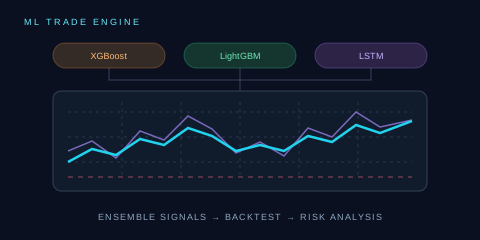
ML Trade Engine
A Python research pipeline combining XGBoost, LightGBM, and LSTM signals with walk-forward validation, out-of-sample backtests, Monte Carlo simulations, and layered risk controls.
ContextSign
A 3-layer real-time system: KNN/SVM classifier over 89-dim MediaPipe hand landmarks, disambiguated by a trigram language model, confirmed via TTS + gesture recognition.
StorageSync
Full-stack home inventory app with recursive location trees, QR/barcode batch scanning, real-time Supabase sync, force-directed knowledge graph, and Stripe subscription tiers — published on iOS & Android.
Atlas
Pick a location on a map and Atlas ingests live data from 6 external sources — demographics, competitors, parcels, traffic, schools — scores candidate sites, and runs an LLM bull-vs-bear debate to synthesize a recommendation.
Zubin Foundation Website
A Next.js platform built with my team for the Morgan Stanley x Zubin Foundation hackathon — serving Hong Kong's ethnic minority community with accessible resources, translated support, and an AI chatbot layer to connect users with services.
Traffic Prediction
An experimental deep-learning project using LSTM neural networks to forecast urban traffic flow from time-series sensor data. Built on Keras with Theano backend and MongoDB-stored hyperparameter sweeps for grid optimization.
Brainrot Defender
A hackathon app that turns accountability into a game: your squad shares a castle whose HP degrades as members doomscroll. Set per-app time limits together and defend the castle — or watch it fall.
TariffMapper
Next.js prototype that maps customs classification codes between China (CCC) and Indonesia (BTKI/AHTN) using GPT-4o. Search by description, HS code, or national tariff line — ranked matches with confidence, match basis, and source references.